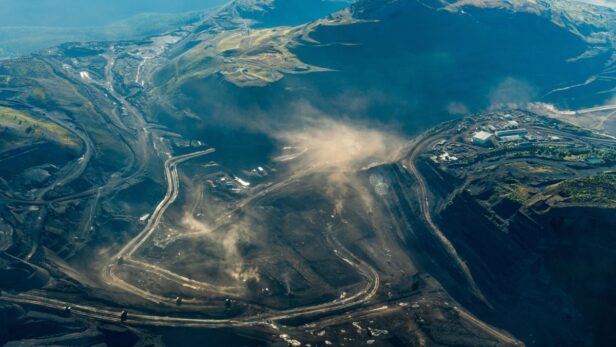
Glencore's mines leach toxic levels of selenium into the Fording River.

The Fording River then flows into the Elk River, which flows into Lake Koocanusa (Koocanusa Reservoir) and the Kootenai/y River in Montana and Idaho, carrying toxic levels of selenium.


This chart represents years of water samples that indicate dangerous levels of selenium for humans and aquatic life.

Learn More

Selenium Pollution From BC Mines Open

Click to expand chart.
Apr 2024 - Mar 2025

Selenium Pollution From BC Mines

Click to expand chart.

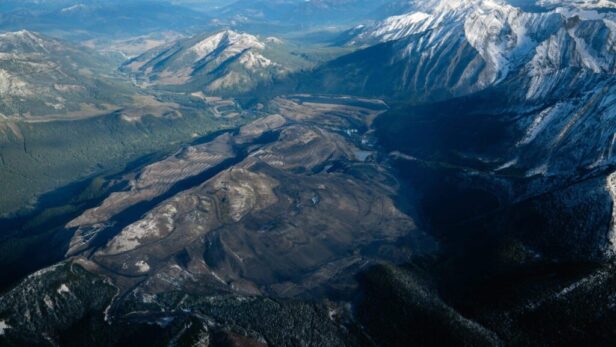
Photo by Garth Lenz, ILCP.

Welcome to the Elk Valley-Kootenai Pollution Website

Information covering the pollution, science, and news about B.C.’s coal mining and its selenium poisoning impacts on this transboundary watershed.

Decades of Elk Valley coal mining by Tech Resources Ltd — and now, new owners Glencore — have led to accumulating levels of selenium over a distance of more than 500 miles downstream in B.C., Montana, Idaho, and the entire Columbia River basin. Some of the levels can be harmful for fish, wildlife and even human health. The interactive graphics on this site demonstrate how the pollution from the B.C. mines cause selenium levels in Montana and Idaho waters to exceed legal limits every day.

This website contains information, data, stories, and news releases about the pollution emanating from Elk Valley coal mines.
Top reads

The Narwhal

Coal mine pollution: international inquiry details plan to investigate Canada, U.S. contamination

After decades of pollution from B.C. coal mines, an international inquiry is proposing to spotlight solutions to issues like selenium contamination.

By Ainslie Cruickshank on February 4, 2025

The Canada-U.S. treaty organization investigating transboundary water pollution from coal mines in southeast British Columbia offered new details Monday about its plan to study the contentious issue, and is now seeking public input…. According to the new proposed plan, an expert panel will compile existing data on water quality and impacts to human and ecosystem health — and explore potential solutions to reduce the flow of pollution from the mines. … Rich Janssen, head of the natural resources department and member of the Confederated Salish and Kootenai Tribes” “We need to see sound science,” he said. “We need to see the data for the mining impacts to fish, water and people and make every effort to heal the watershed.”  Read more

Montana Free Press

Study finds mining-related pollution 350 miles downstream of Canadian coal mines

Regulators in the U.S. say the study shows that dangerous levels of selenium are entering the waterways of Montana and Idaho.

By Amanda Eggert on September 19, 2024

Researchers with the U.S. Geological Survey have concluded that a large coal-mining operation in British Columbia is sending pollution more than 350 miles downstream into the Columbia River. The study also found that selenium levels in the Upper Columbia watershed continue to rise in British Columbia, Montana and Idaho, despite Elk Valley Resources’ $1.4 billioninvestment in technology to remove selenium, a trace element that can hamper fish reproduction and lead to gill, facial and spinal deformities.  Read more

Business In Vancouver / Glacier Media papers

Sale of B.C. coal mines to Glencore was bad deal for Canada: report

MiningWatch report question's Swiss mining giant's track record.

By Nelson Bennett on July 22, 2024

Canadian and British mining watchdogs are criticizing the Trudeau government’s approval of the sale of B.C. steel-making coal mines to Glencore Plc, saying it’s a bad deal for Canada.  Read more

New York Times

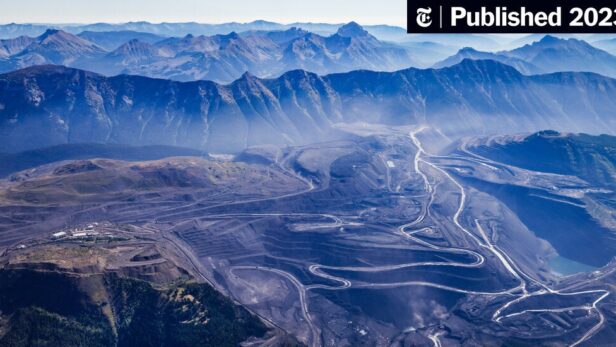
Tracing Mining’s Threat to U.S. Waters

Environmental concerns are raised anew about potential contamination from Canadian open-pit mines flowing through the waterways into Montana’s lakes, harming fish.

By Jum Robbins on July 11, 2023

In the mountain streams of southern British Columbia and northern Montana, a rugged part of the world, fish with misshapen skulls and twisted spines have been caught over the years. Many scientists attribute the malformed creatures and declines in certain fish populations to five enormous open-pit coal mines that interrupt this wild landscape of dense forest flush with grizzly bears and wolves. For decades, these mines owned by Teck Resources, a multinational mining company based in Canada, have been the subject of environmental concerns because of chemicals like selenium, a mining waste product, that leach into mountain rivers flowing through Indigenous land and across the border into U.S. waterways.  Read more

More stories

Featured science

Environmental Science & Technology Letters, 2024

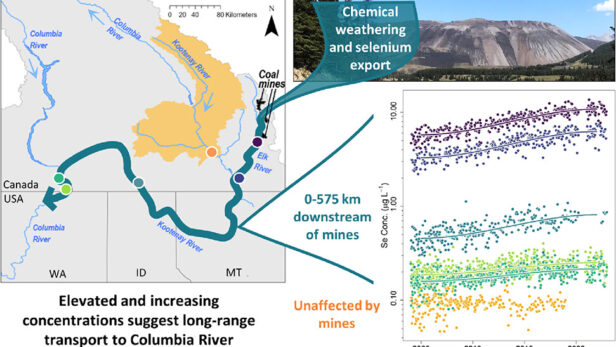
Evidence of Long-Range Transport of Selenium Downstream of Coal Mining Operations in the Elk River Valley, Canada

Foster, M. J., Storb, M. B., Blake, J. M., Schmidt, T. S., Nustad, R. A., & Bussell, A. M.

Summary: Selenium from Elk Valley mines is transported over 575 river km. Flow-normalized Selenium concentrations increased between 35-89% from 2005-2021. No increases were seen at sites unaffected by Elk Valley Pollution. Average annual loads of Se concentrations had increased by an order of magnitude at mine-affected sites.  Full paper

Environmental Science & Technology Letters, 2022

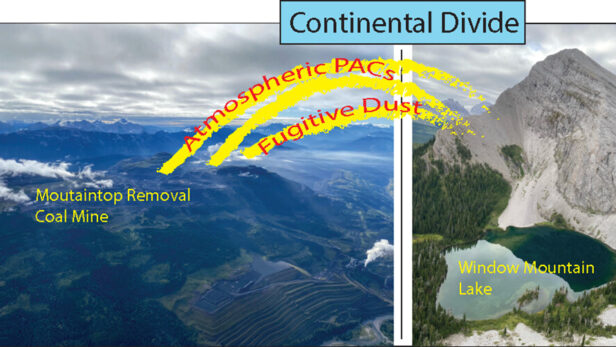
Transboundary atmospheric pollution from mountaintop coal mining

Cooke, C. A., & Drevnick, P. E.

Summary: Dust created through coal mining in the Elk Valley was detected on the opposite side of the continental divide in the eastern slopes of Canada’s Rocky Mountains. A sediment core from a high alpine lake composed of a 30x increase in environmental contaminants that align with coal mined in the Elk Valley.  Full paper

More science